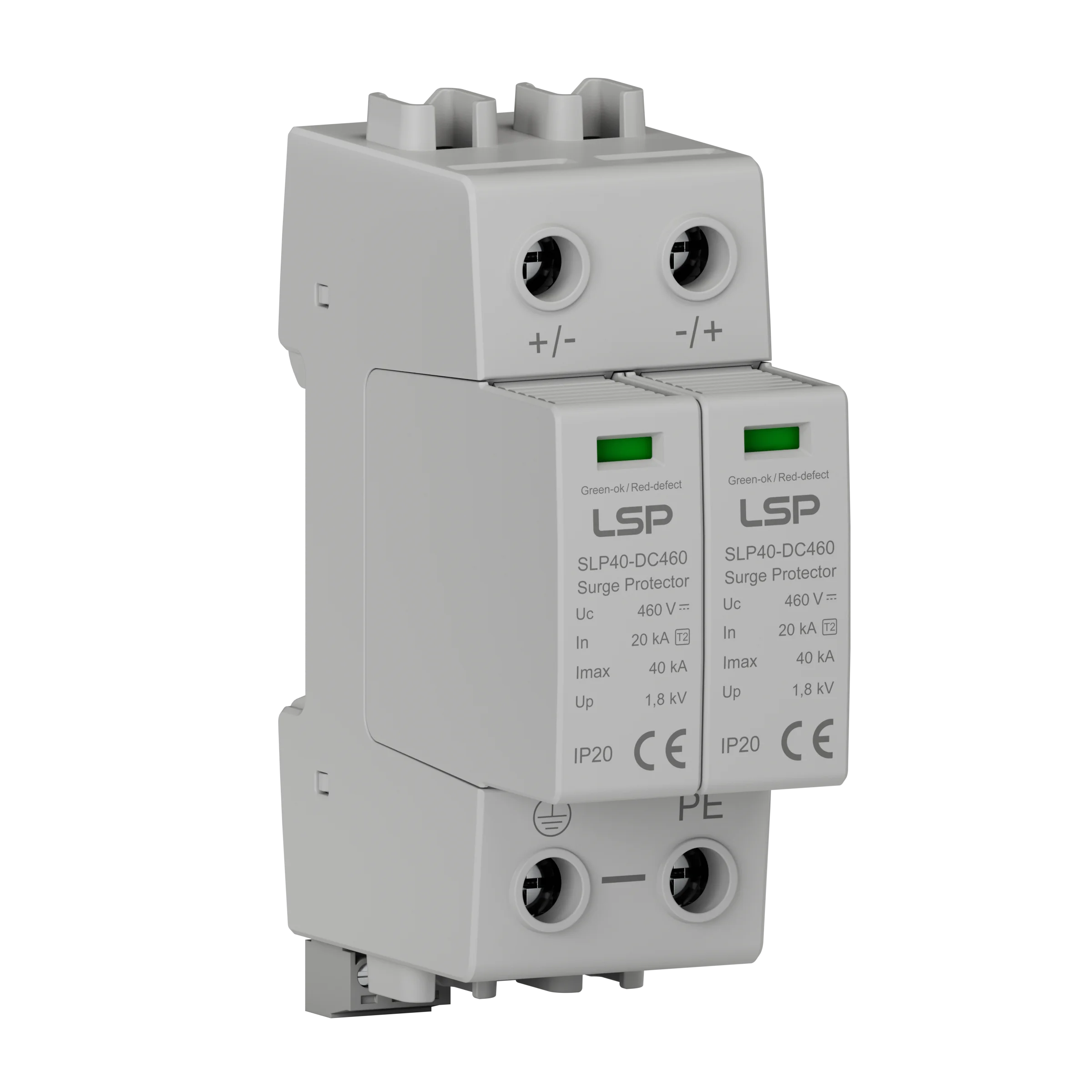
What it does—and where it belongs
A PV-specific SPD limits transient voltage caused by lightning effects or switching. It does not absorb unlimited energy, replace bonding/lightning design or protect against sustained overvoltage.
At the inverter DC input and, depending on cable length, lightning protection arrangement and risk assessment, near the array or inside a combiner box.
What to check before you buy
PV-specific certification
DC SPDs for photovoltaic generators should be evaluated for PV duty under IEC 61643-31, not selected as ordinary DC or AC surge strips.
Correct SPD type
Type 1 capability is associated with lightning-current duty; Type 2 handles induced and switching surges. Selection follows the lightning protection and risk design.
Voltage protection level
Check both maximum continuous PV voltage and the protection level seen by the inverter. Bigger voltage markings are not automatically better protection.
Replaceable status
A clear end-of-life indicator and plug-in modules make inspection and replacement practical.
Red flags in a quotation or site visit
- An AC SPD is installed on PV DC
- Ucpv is below the array's calculated maximum Voc
- Long, looped connection leads defeat the low-impedance path
- No backup-protection or short-circuit coordination data
Commissioning checks to request
Ask the installer to verify
- SPD leads are short, direct and routed to minimise loop area
- Earth/bonding conductor follows the manufacturer diagram
- Status indication is visible during maintenance
- Type and locations match the lightning risk and cable routing assessment
Common mistakes
- —Choosing only by kA marketing value
- —Confusing Type 1 with Type 2
- —Mounting the SPD far from the equipment with long leads
- —Assuming an SPD eliminates the need for earthing and equipotential bonding
A better quotation line item
PV DC SPD, Type ___, Ucpv ___ V DC, In ___ kA, Imax/Iimp ___ kA as applicable, Up ___ kV, PV circuit configuration ___, visual status indication and IEC 61643-31 evidence.
This wording is a procurement prompt, not a final engineering specification. Values must come from the approved single-line diagram and equipment manuals.
Standards and sources checked
Product requirements and tests for SPDs dedicated to the DC side of PV systems.
Selection, installation and coordination principles for PV SPDs.
PV array design requirements covering DC wiring, protection, switching and earthing.
Pakistan project note: ask the installer to confirm the current PSQCA-adopted standard, inverter instructions, earthing rules and the latest DISCO/NEPRA interconnection requirements applicable to your site.
Questions about DC SPD
Do all solar systems need a Type 1 SPD?
No. The decision depends on the building lightning protection system, separation distance, risk assessment and installation layout. Many systems use Type 2; Type 1 or Type 1+2 is selected where lightning-current duty is expected.
Is the kA number the main buying criterion?
No. Ucpv, Up, SPD type, PV circuit configuration and lead layout are equally important. The protection system must be coordinated, not chosen from one headline number.