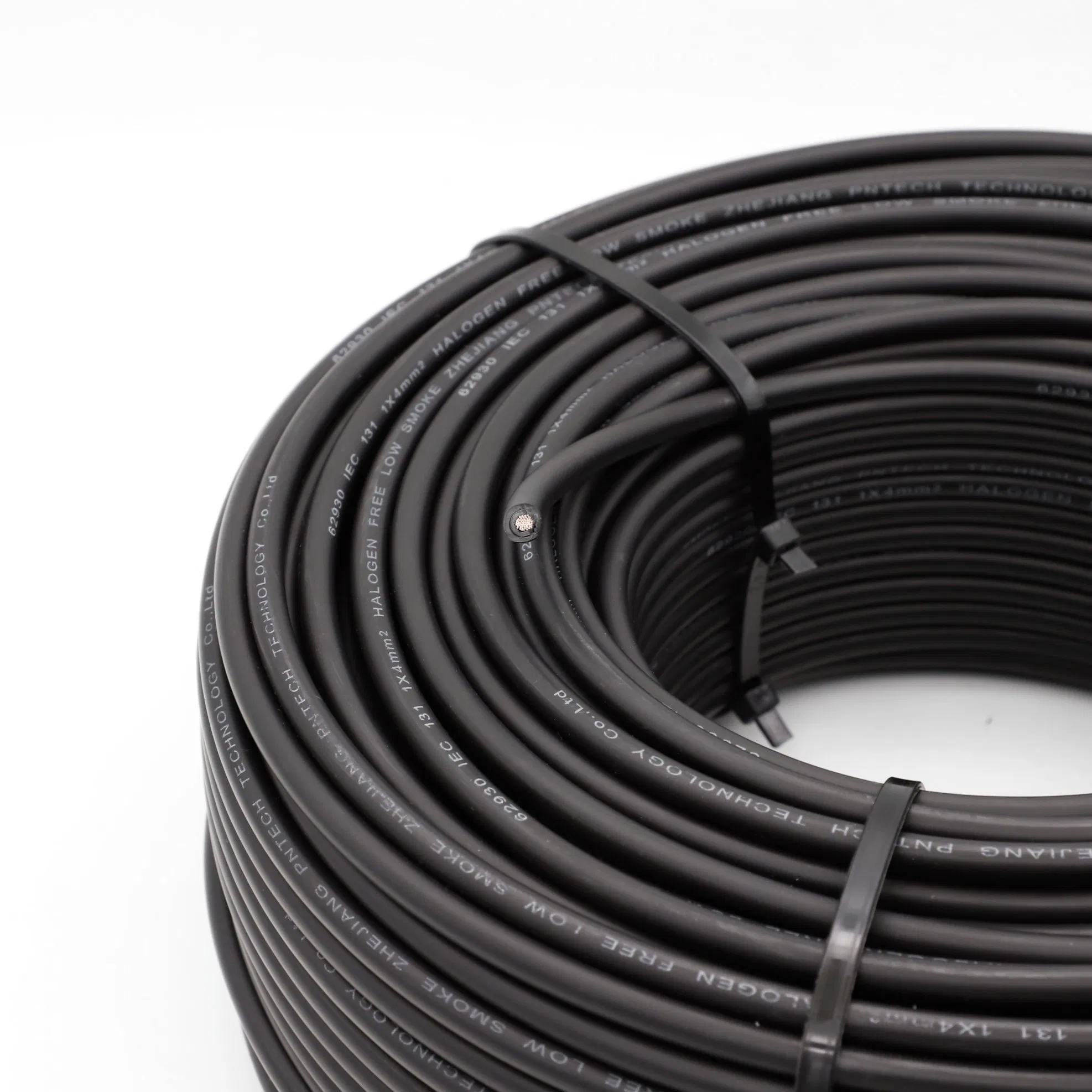
What it does—and where it belongs
PV cable is a flexible, single-core cable designed for the DC side of photovoltaic systems. Cross-section is chosen from current capacity, voltage drop, fault protection, installation method, grouping and ambient temperature—not from system kW alone.
Module leads, string home-runs, combiner-to-inverter circuits and other PV array DC wiring. Battery cables are a different duty and are sized separately.
What to check before you buy
Traceable construction
Ask for conductor material, strand class, insulation/sheath compounds, voltage rating, temperature rating and test standard.
Genuine conductor area
Verify markings and datasheet mass/conductor construction. Undersized or copper-clad aluminium cable can overheat and create excessive voltage drop.
Environmental suitability
Outdoor runs need UV, ozone, water and temperature resistance; roof routing also needs mechanical protection and support.
Connector compatibility
The cable outside diameter and conductor cross-section must fall inside the connector manufacturer's approved range.
Red flags in a quotation or site visit
- No continuous metre marking or manufacturer identity
- Copper-clad aluminium sold as copper
- House wiring cable proposed for exposed rooftop DC
- Cable size selected only because it is common in the market
Commissioning checks to request
Ask the installer to verify
- Positive and negative conductors are identified throughout
- Cables are clipped clear of roof surfaces, sharp edges and standing water
- Bend radius and support spacing follow the maker data
- Voltage-drop and thermal calculations are included in the handover pack
Common mistakes
- —Leaving loops or loose cable under modules
- —Mixing connector and cable sizes outside the crimp range
- —Ignoring rooftop temperature and cable grouping
- —Using red/black appearance as proof of PV certification
A better quotation line item
PV DC cable, single-core tinned copper, ___ mm², rated ___ V DC, operating temperature ___, UV/ozone/weather resistant for the installation method, with IEC 62930 test evidence and compatible connector diameter range.
This wording is a procurement prompt, not a final engineering specification. Values must come from the approved single-line diagram and equipment manuals.
Standards and sources checked
PV DC cable requirements up to 1.5 kV DC, including 90 °C continuous conductor operation.
PV array design requirements covering DC wiring, protection, switching and earthing.
Selection and application requirements for equipment in PV electrical installations.
Pakistan project note: ask the installer to confirm the current PSQCA-adopted standard, inverter instructions, earthing rules and the latest DISCO/NEPRA interconnection requirements applicable to your site.
Questions about PV cable
Is 4 mm² cable enough for every home system?
No. Required cross-section depends on current, one-way length, allowable voltage drop, grouping, ambient temperature and protective-device coordination.
Can normal household wire be used on the roof?
Ordinary building wire may not have the UV, weather, temperature and double-insulation characteristics expected for exposed PV DC wiring.